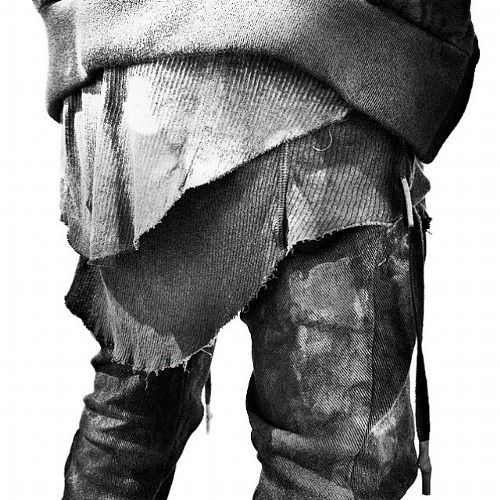
Suppose a rebellion. We hypothesize a post-apocalyptic massacre that wants to annihilate the heaviness of the commodity and the machine that has reduced the human expression to a signifier devoid of any meaning or, even more treacherously, that has given the possibility to any materialization to assume an anarchic meaning disconnected from the primary context and parent intention. To survive what must be re-invented is the use value of form, of matter, of that tangible component that must be rediscovered in virtue of a world that is collapsing under the weight of digital abstraction. The work of art, intended as an artefact, that is, made by hand must be reduced to the maximum of silence, eliminating every text and hyper-text, taking the subject as the mere pretext for art – and therefore fashion itself. In a post-digital, post-artisan context, where the natural manifests itself in the artificial and the artificial takes on a naturalness never seen before, the way of creating is addressed to a purely carnal and material vote, that same carnality made of primary instincts, to finally find and reveal what has long been forgotten – that is, the human. Form and content loom violently with their new de-semantization: a desublimatory act of aggression for a subject that is no longer localized, no longer has roots, with the sole objective of disregarding all expectations. The informal action takes hold, which serves to declassify, bring down things in the world, a performative act connected to an unverifiable beauty hierarchized, to destroy any pre-established concept, to be wrecked in unprecedented manifestations and artistic expressions, precisely because primal and uterine. What counts is the operative act in itself, neither the form nor the content, but the operation that now displaces these two terms. If in the contemporary the blind arrogance of virtualization has annihilated every material substrate, making each super-flat human ravine, terribly vacuous, where the work of art in its inert form of object is assumed as a symptom of a larger reality replacing it to an ultimate truth. The materiality of the body has lost all its value, nature and historical and social meanings are devoid of explanatory endowments. The nature of the formless is inserted in this perspective, breaking every subject and re-establishing it on different bases, with the intent not to deny it, but to sacrifice it as in an act of dismemberment; a new classification by virtue of a de-classification: if human creation is liberated from the structures of representation, its existence must be justified by virtue of the search for its essence: from the visual to the tactile, from verticality to horizontality, from the human all animal, in a sublimatory and aesthetic activity that separates the person who perceives it from the body.
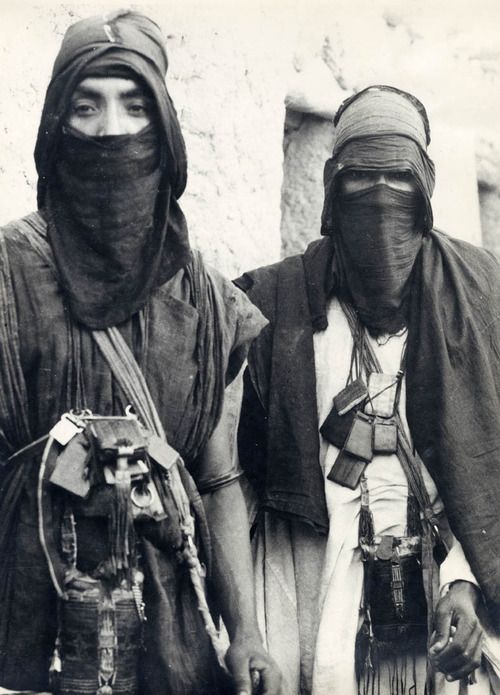
Who intercepts perfectly the central priorities of our time is Boris Bidjan Saberi with his return to primordial and primary experiences, authentic, sometimes extreme. The German designer is a shaman of the material: tar, grease, leather, felt, resins, vinyl, rust, metal, iron, blood iron, blood as true symbols of the shapeless, of beauty and unverifiable but significant creation. The materials used by him are not coincidentally similar to those of contemporary art – in particular referring to Damien Hirst and the Wiener Aktionismus, striking a wave of claims on the rights of the individual and the community, crushed by the power of the machine and industry, with all the ranting of goods and mass articles that have limited human experience to the only artificial, plastic, serial perspective. The fullness of being must be propagated against the pettiness of having.
His choice of a “low” materialism and materiality is not accidental. His way of understanding fashion is a method to mediate violence, an intermediary to visually bring horror to the surface. To show this human annihilating violence also means to visualize how a given culture treats and relates to violence itself and how it occult. If, in front of his creations, we sometimes feel a sense of loss and inadequacy we owe it to the violent carnality of his work, interesting not so much for the violent himself, but as for his civiised scotomization that structures him as otherness; the occult subject or excludes from the ambit of his conscience or of memory an event or a memory with a painful or unpleasant content. Here then is that his way of “making fashion” becomes an alteration of the repressed, an alteration downwards, a transition to a perfect heterogeneous state that corresponds to the totally other, to the sacred. All that is treated as a foreign body is at the same time considered as sacred, divine, marvelous. Its shapeless production refuses to be assimilated to any concept or abstraction, his nature produces only monsters, there are no deviants in this sense, because in nature there is nothing but deviance. When Saberi decides to use animal blood or distorting acids, he does so with the intent to materialize revolutionary forces attributable to Surrealism because they fascinate Eros, a marvel that has to do with the death instinct and the pleasure principle. The adoption by his models of garments that seem to come out of the bowels of the earth gives a real meaning to the relationship between sexuality – understood as sensuality, orgy of the five senses, and that destruction aimed at the plasmatic reconstruction of the epidermal membrane. His debts are actually attributable to Japanese fashion, especially as regards the cult of asymmetries, the raw cut, the rough and rugged surfaces, raped, dismembered in an amazing celebration of shapeless powers. Whatever this inform wants to indicate has no right or sense, it is only that which must be shattered because it can not be tolerated by reason; an anthropology of the resemblance of cruelty, a rhythmic condition of form, a morphology that a certain power to continually deform, passing quickly from pleasure to disgust, a decomposition of forms, a figurative aesthetic transposition of deformation. And again, its use of cotton, fiber, vinyl-coated leather demonstrates how primitivism can be given by conferring the status of living and palpitating substance to the synthetic elements, making a fetishization of the material that becomes seductive waste.
If the human being feels pride in his erection because it is better than the animal state, he has not fully realized that this satisfaction stems from a fundamental repression of his primordial instincts that instead make the horizontal axis mouth-ano an expressive, more honest and faithful carnality. The persistent psychological battle between the real image and the perceived image of the human body with its territorialization makes the individual unconscious of his repressed-evolutionary state. What must be questioned and then re-established is the spatial balance of the territory and the human universe. The original psychic image remains trapped by the mirror if it is not freed from the mental permanence of the ego, making the ontological destination totally alienated. In order to restore and fill the epistemological void arising from the primordial unawareness of being a body, in addition to the mortal security of possessing it without being able to fully dominate it, the unconscious process must be restructured as a consequence of the erection of man on earth, the body must be experienced in its wholeness, fundamental anisotropic, gestaltic and not symmetrical, created in the image of the human subject, subjected to gravitation – the space of perception is transformed into a projection space of this subject, delivering to the user the imaginary power as a fracture of an eternal invisible mirror. The libidinal energy is sublimated and removed from the genital space and from the erotic goal to be refocused and directed towards art and the creative act.
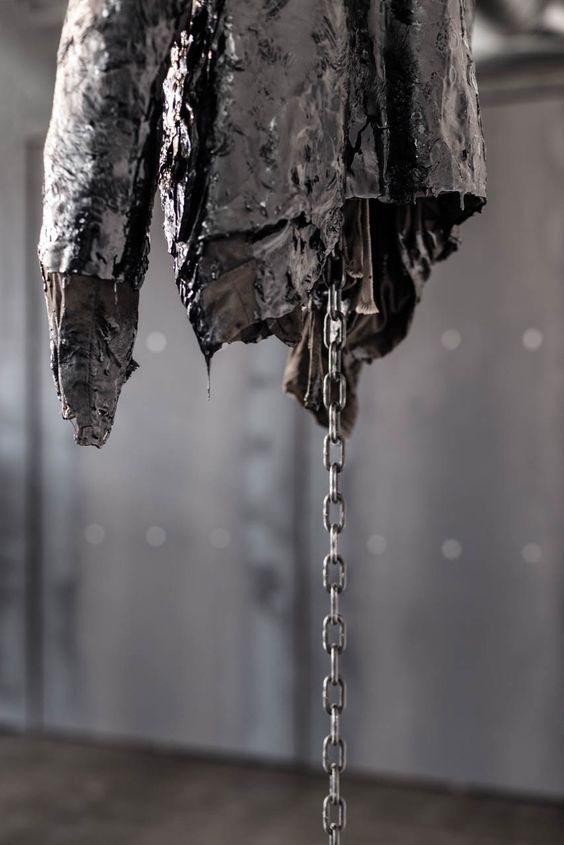
The voluntary absence of aesthetic pleasure and this tragic tension to the one-piece material personalization tend to tear apart the spatial coordinates within which the whole informal work moves – and the Saberian elaborate. Creation makes sense when its characteristics depend on the direction in which they are considered. Jackson Pollock understood that perfectly, working with the continuous contamination between horizontality, matter and anatomical connection, he transforms the floor into a place of production opposite to the vertical direction of the high-cultural ideals. The struggle against the bodily axis and bourgeois culture destroys every logical literal representation of the things of the world in favor of a transversal, symbolic laceration concerning the signs and no longer the obvious materialization of the banal mimesis. The material condition of the horizontal sign was first explored by Robert Morris, who breaks down every debt with the force of gravity, disfigures every pattern to dismantle every manifestation of the form and then Kazuo Ishiraga, where the imprint is interpreted as oxidation, permanence of the sign. The interconnection between the body image in its entirety and the phallus should then be read as the elaboration of a fetishism that in Saberi’s work translates into a visceral love for the underground culture and the collective dimension – to draw from the most subterranean bowels of production cultural is an act of devotion to those expressions that most attacked the most violent and mean social dogmas, to rediscover the expressive power of creating and doing linked to a pure material horizontality, without having anything to do with the bourgeois verticality that it destroys the inventive fullness. In this sense the shapeless work of being would be a state of being that imperfectly captures the nature of the operation and causes it to precipitate seriously in a world in which the dictator of gravity no longer makes sense, because the only rules are established by the animal condition, then no longer re-pressed, but ex-pressed.
Already in “Beyond the Pleasure Principle”, Freud wonders whether psychotic and pounding repetition should be considered as the beating of Eros or something that instead lies behind this voluptuous principle, threatening it with violence, a compulsive repetition identifiable with Thanatos , death. We must ask him whether this pulsating function, this event in which the subject is witness and at the same time absence, is situated in the unconscious or instead forms part of reality, devastating a subject that was not present and did not have time to defend himself. A trauma must therefore be read as the form of witnessing one’s own absence, making the subject-object totally incapable of signifying, dismantling the whole body in infinitesimal parts-objects that cause that same nostalgia of the body that awakens phenomenology. The formal and regular identity must then be dressed in an object-matrix that allows the collapse of the same regularity, breaking the identity that finally moves towards the bad form, the violence that lies waiting for the form.
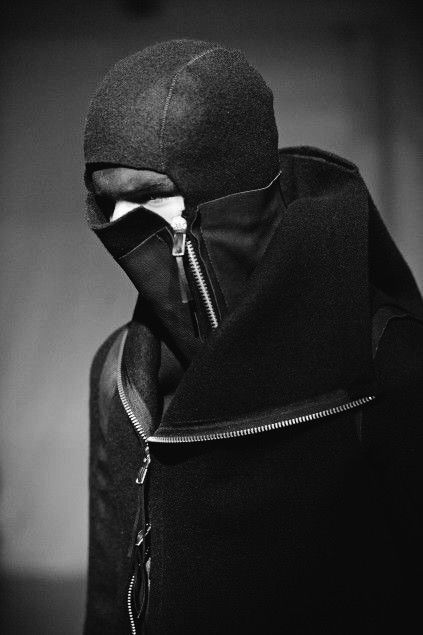
The informal operation then concerns the agitation and the de-formalization of the view through the organs. To break into this infinite libidinal permutation is an act of pulsation that concerns a perpetual beat that crosses and lacerates the carnal. The ultimate aim is to link the now mistreated visuality to the body, making it impure, a type of impurity that slides along the circuit of the whole organism into a permanent delay of satisfaction connected to desire. The repetitive impulse that seems to move each inorganic organ dissolves into the image of the Other, suggesting a sense of erosion of the good form, the evolutionary forces of a pulsation that shapes it, overpowers and disseminates its laws. And it is precisely the pulsation of the alchemical laboratory of Boris Bidjan Saberi that becomes the favorite place in which his ideas and his extreme experiments are born, his cultural and identity personalizations. Each of his surfaces announces that the visual experience takes shape in a condition of simultaneity, each of his creations recites in sync with the others, breaking down not only the spatial burden, but also the temporal tragedy that succumbs. Following the vein started by the designers associated with him in the informal landscape, Saberi proposes each garment as a representation of the human anatomy, the area of digestive, excretory, sexual and chemical exchanges and fluidifying, psychologically connected to the impetus of the will , that impulse that brings the new that we experience in our body-making. In a perennially post-industrial, neo-industrial, proto-industrial atmosphere, the creative performative ritual is an act of communion, where clothes’ relics represent the low and high unifying allegory, identifying its sacrificial figure with the lowest of social subjects – underground, again. His garment is then a social sculpture that becomes the aestheticized version of a post-capitalist utopia, a form of life not territorialised by any social division, the daughter of a reincarnation of a non-alienated work; he works in the margins, works in the utopia of recycling that waste, that waste deducted from a homogeneous society, too anxious and psychotic in wanting to delegate everything to the laws of efficiency. His shamanistic figure reveals the form blocked in the chaos of matter, where the formless is matter, everything is recovered from an all-encompassing sculpture. The first element on which this sacrifice operates is traceable in the spasmodic use of the skin, favoring a skin-mechanism, a techno-organic fashion now synchronized to the human body through fats, oils, resins and waxes. The live cuts and the metallic stratification are the subject of presentation of the sublimated condition of the form, to destroy the order, to sacrifice this vision through the shock effect of the impulse.
The sub-territorialization of the body effected by the informal process asserts a total overturning of the object, of the work, of the human being. Let us try to imagine how the Ego can be perceived in a world in which no one has knowledge of the symmetry of the mirror; that symmetry that finds its formation in the primordial narcissistic process, a parent of aggression, sexuality, sensitiveness, alienation. Attacking perception means then attacking our being oriented, attacking that narcissism that binds the subconscious to the possibility of being able to recognize itself in a specular attraction, erotic but fallacious. If, in the mirror, thanks to the work of Jacques Lacan, the place of negotiation is established as a perpetuation of identity, disrupting each spatial coordinate, the informal creation now implements a de-formative action, depriving meaning of every artistic-cultural expression – if the inverted object no longer belongs to the body becomes a sort of black hole in perception, acting as a memento of the precarious human condition founded solely on its verticality.
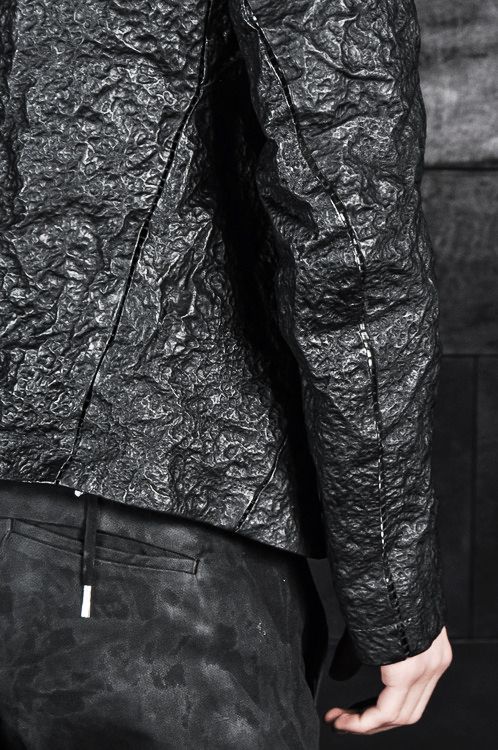
From this perspective, the work of Boris Bidjan Saberi acquires physical-dynamic connotations aimed at resolving this entropic state. The constant and irreversible degradation of energy in every system, a degradation that leads to a continuous state of disorder and non-differentiable within the matter, provides for a waste of energy and consumption as a true act of regulation, which, through the excess, try to set up an initial mess. Saberi therefore tries to found a religion, in its etymological sense, to re-ligare, reiterating the importance of relationships and connections, ready to coagulate in community; his is a secular, post-industrial religion, an ideal modern matrix, which feeds principles awaiting for a re-generation. The object of veneration and sacrifice in his case acquires human, sub-human connotations, wanting to rehabilitate the body component long forgotten and rejected by the dictatorship of capitalist alchemy, which through a process of reification has transformed everything into food for commodification. The creative process of Saberi finds its basis then in the rehabilitation of the waste, as truth, of the residue, making his atelier a panorama where the precipitated excess becomes depth and beauty. In this way, the designer solves the traumatic nature of the encounter with a Real that is no longer symbolizable, its aestheticization of what lies, attacks the rational and tectonic force of the well done, strategically sweeping away the constructed object to disperse the fragments. Through every expedient used by Saberi – that is the creative process, the space of creation, the matter – what is frozen is the interstice, the space in its condition of being “like anything else”; freezing the possibility of meaning, the semiotic is articulated through a flow, a transfer of energy that is maternal, being the mother, the matrix, the becoming-imprinted.
The accumulation of non-assimilable waste is inevitable. The patina of human that surrounds the informal Saberian work becomes an index of a duration, dust and ashes as a double index of the human passage, favoring the production over the over-production.
And then the shaman turns into an alchemist, ready to transform the noise, all that has no informative content, into an exquisite existential fabric.
 [sub]Fashion